
Every autumn, millions of sports bettors open their sportsbooks to find numbers that have drifted dramatically from where they opened on Sunday night. A spread that opened with the home favorite giving four points suddenly flips to a pick’em by Thursday afternoon. While atmospheric weather conditions and sharp betting action certainly play a role in market fluctuations, no single catalyst destabilizes and reshapes NFL betting markets faster or more drastically than player injuries.
Navigating the NFL betting board requires far more than checking a Sunday morning inactive list. The sports betting market is an information-processing machine, and player availability is its primary fuel. To build a sustainable betting strategy, you need to understand how oddsmakers assign numerical values to individual players, why the betting public routinely overreacts to certain absences while ignoring catastrophic ones, and how injury reports create profitable inefficiencies across point spreads, totals, and derivative markets.
The Mechanics of Market Reaction: How Oddsmakers Price Health
Bookmakers do not price NFL games by merely guessing the final score. Instead, they operate off proprietary power ratings that evaluate every team on a neutral field. Each roster is broken down into numerical valuations where specific players are assigned a point value above or below replacement level. When an injury occurs, oddsmakers do not wait for Sunday to adjust; they downgrade the team’s power rating in real time based on the expected performance drop-off between the starter and their backup.
However, the timing and severity of market movement depend heavily on how the news breaks. Injury information moves through the market in distinct phases:
Initial speculation often begins during post-game press conferences or through early Monday medical imaging leaks. During this phase, sportsbooks rarely make massive adjustments, but they may lower their betting limits or temporarily take the game off the board to protect themselves from high-stakes syndicate action.
Once a player misses practice mid-week, sportsbooks begin shaving half-points off spreads to balance their risk. By the time an official designation arrives on Friday afternoon or when active rosters are submitted ninety minutes before kickoff, the market has usually absorbed the news entirely. The bettors who profit consistently are those who understand whether the current line reflects an accurate assessment of player absence or an emotional overcorrection fueled by media frenzy.
Positional Valuation and the Spread: The True Worth of Key Personnel
A common misconception among casual bettors is that star power correlates directly with point spread value. In reality, football is a hyper-specialized sport where position dictates market leverage. A loss at one position can fundamentally alter game theory, while an injury elsewhere barely registers on the betting screen.
Quarterbacks and the Point Spread
No position in professional sports carries more weight on a point spread than the starting NFL quarterback. Because the quarterback handles the ball on virtually every offensive snap and drives offensive efficiency, losing an elite signal-caller creates massive market adjustments.
An elite tier quarterback typically accounts for four to seven points against the point spread relative to a baseline backup. A mid-tier starter usually commands between two and three points, while the gap between a lower-tier starter and a competent veteran backup might only trigger a half-point to one-point adjustment.
The real secret lies in assessing the specific drop-off between the starter and the backup systemically. When a dynamic dual-threat quarterback suffers an injury and the backup is an immobile pocket passer, the offensive coordinator must overhaul the entire playbook on three days of practice. Oddsmakers must account not just for a drop in raw arm talent, but for the destruction of the offense’s red-zone efficiency and third-down conversion rates.
The Hidden Value in the Trenches
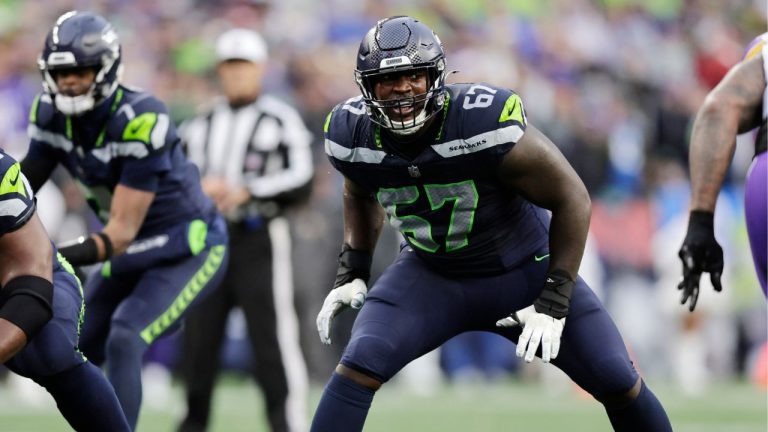
While quarterbacks grab the headlines, sharp bettors pay obsessive attention to offensive line health. An individual offensive lineman rarely moves a betting spread on his own; an All-Pro left tackle might command a half-point adjustment at most.
The danger lies in continuity. Offensive lines operate as a cohesive five-man unit where communication, chemistry, and combination blocking matter far more than individual athletic grades. When an offense loses its starting center—the player responsible for setting pre-snap protections and diagnosing blitz packages—the offense frequently experiences silent communication breakdowns, false start penalties, and blown pass-protection assignments.
When an offensive line is missing two or three starters, the entire offense degrades. Quarterbacks are forced to release the ball faster, deep passing concepts are abandoned, and running backs find fewer rushing lanes. Oddsmakers will often shade spreads downward by a point or more when an offensive line is severely compromised, yet the general public routinely misses this nuance.
The Public Bias Around Skill Players
Recreational bettors frequently overestimate the point spread value of running backs and wide receivers. Fantasy football has conditioned fans to view high-scoring skill players as indispensable, prompting heavy betting reactions whenever a marquee wide receiver or running back lands on the injury report.
Historically, even a superstar wide receiver or bell-cow running back is rarely worth more than half a point to one point against the spread. Modern NFL offenses rely on committee backfields and spread formations that allow passing concepts to target scheme-created space rather than individual talent. Unless an offense runs entirely through a single generational target who dictates defensive coverage shells, the replacement player will absorb sufficient volume to keep the offense functional.
When the public frantically bets against a team simply because their leading rusher is sidelined, sharp bettors frequently jump on the inflated underdog, recognizing that the line has moved beyond the actual statistical drop-off.
Cluster Injuries: When the Sum Exceeds the Individual Parts
Isolated injuries are manageable for most NFL coaching staffs; cluster injuries are devastating. A cluster injury occurs when multiple players within the same positional group or unit suffer injuries simultaneously, stripping a roster of its tactical depth.
Consider the defensive secondary. A team might easily withstand losing their top cornerback if their second and third corners are capable of playing outside coverage. However, if that same team loses their top two cornerbacks and their starting free safety in the same two-week span, an opposing offensive coordinator can manipulate matchups relentlessly. The defense can no longer play man-to-man coverage without safety help over the top, leaving intermediate zones vulnerable and destroying third-down defensive efficiency.
Similarly, multiple injuries across a defensive line neutralize pass-rush pressure without blitzing. If an edge rusher and a three-technique interior tackle are both out, opposing quarterbacks enjoy clean pockets, allowing marginal offenses to look exceptional. Always examine the concentration of injuries within a specific room rather than counting total names on the injury ledger.
Deciphering the NFL Practice Report: Beyond the Labels
Every Wednesday through Friday during the regular season, teams release official practice participation reports. Understanding the cadence of these reports is critical to anticipating line movement before it happens.
Player statuses during the practice week are categorized into three designations:
Did Not Participate (DNP) indicates that the player sat out practice entirely. While a veteran taking a rest day on Wednesday is routine, consecutive DNPs on Wednesday and Thursday are strong indicators that a player will miss the upcoming game.
Limited Participation (LP) means the player took part in select positional drills or non-contact work. A progression from DNP on Wednesday to LP on Thursday and Friday often signals an upward trajectory toward playing.
Full Participation (FP) signals that the player practiced without limitation and will almost certainly suit up.
The final official game status report drops Friday afternoon, designating players as Questionable, Doubtful, or Out. Ever since the league eliminated the Probable designation, the Questionable tag has become a broad umbrella. It encompasses everything from a banged-up veteran who is 90% likely to play to a game-time decision with a true coin-flip chance.
Smart bettors follow local beat reporters to observe body language, practice tempo, and rep distribution among second-string players. If the backup quarterback is taking first-team reps on Thursday while the starter stands on the sideline in a hoodie, the market will move long before the official Friday report is filed.
Exploiting Public Overreaction and Line Overcorrection
Because recreational bettors wager primarily on big-name players and recognizable brands, sportsbooks frequently use injury news to shade numbers in their favor. When an injury to a prominent player is confirmed, the initial flood of recreational money pushes the spread rapidly.
This phenomenon creates a psychological trap known as the overcorrection. Oddsmakers know that casual bettors will unconditionally bet against a team forced to start a backup quarterback. Consequently, sportsbooks will often push a line through key numbers—such as three, six, or seven—to entice contrarian action or balance their liabilities.
When a point spread crosses a key number due to public panic, immense value opens on the injured team. Backup quarterbacks often play with a conservative, run-heavy game plan designed to protect the football and manage the clock. This conservative approach shortens the game, reduces total possessions, and naturally keeps the margin of victory within reachable backdoor-cover territory.
Recognizing when an injury has been over-penalized by the betting market allows disciplined handicappers to buy teams at peak market discount.
Totals and Derivatives: Finding Value Beyond the Spread
When key injuries strike, the most lucrative opportunities often appear on betting totals and in-game derivative markets rather than the standard point spread.
A common reaction to an offensive injury is an immediate bet on the Under. If a starting quarterback or top offensive lineman sits, scoring expectations drop. However, defensive injuries can accelerate game totals even faster. When a defense loses its central run-stoppers or boundary corners, the opposing offense scores faster and with greater efficiency, forcing the trailing team into an aggressive, pass-heavy pace that drives the total Over.
Furthermore, backup quarterbacks change offensive pacing. Coaches typically call fewer deep pass attempts, utilize heavier two-tight-end sets, and emphasize the run to shorten the game. This shift directly suppresses first-half scoring, making first-half Unders and opposing team totals exceptional alternative targets.
Proposition markets also experience immediate shockwaves. When a starting wide receiver sits, their vacated targets do not evaporate; they are redistributed. Analyzing target shares, snap counts, and route trees reveals which secondary receiver or pass-catching tight end will see an expanded role, often before bookmakers adequately adjust individual yardage and reception props.
Strategic Guidelines for Navigating Injury News
Successfully integrating injury analysis into your NFL betting routine requires discipline, preparation, and speed. Adhering to several core principles will keep you on the profitable side of line movement:
Establish your own baseline player values before the season begins. Knowing precisely what a specific player is worth to your numbers prevents you from reacting emotionally to breaking news. If you rate a defensive end at one point and the market moves the line two full points upon news of his calf strain, you know immediately that the market has overreacted.
Beat the news cycle or wait for the peak. The worst possible strategy is betting an injured team’s opponent after the market has already moved three points. At that stage, you are paying the absolute highest price for the news. Either develop the alerts and network necessary to bet within seconds of a credible report, or exercise patience and wait for the market to overextend itself so you can buy back the injured side at a bargain number.
Pay attention to scheme fit over raw talent. A veteran backup quarterback who has spent three seasons in the head coach’s system is often far more reliable against the spread than a more physically gifted newcomer who lacks familiarity with hot-read adjustments and line protections.
Track key numbers relentlessly. Never sacrifice a half-point around the numbers three or seven just to fade an injury. If an injury moves a favorite from -2.5 to -3.5, the math fundamentally changes. Football games are won and lost on specific margins; no injury handicapping strategy succeeds if you consistently take the worst of the number.
By viewing injuries through the lens of market psychology, positional replacement value, and roster depth, you transform what appears to be chaotic weekly uncertainty into one of the most reliable and consistent edges in sports betting.


